Identity Crisis

A little more than a year ago my 7-year-old son, Joshua, had an identity crisis. He said the pretty ladies were white and he wanted to be white. Oh, you know my heart sunk. My son didn’t think his momma was pretty. He despised how his grandmothers, aunts and friends look. Blinking to hold back tears, catch my breath and move the lump from my throat, I asked him did he know what he was saying meant. I asked him did he know that he was saying that he didn’t think his momma was pretty. He thought for a second and then said, “Yes. The pretty ladies are white. You don’t have clothes like the ladies at the casino.”
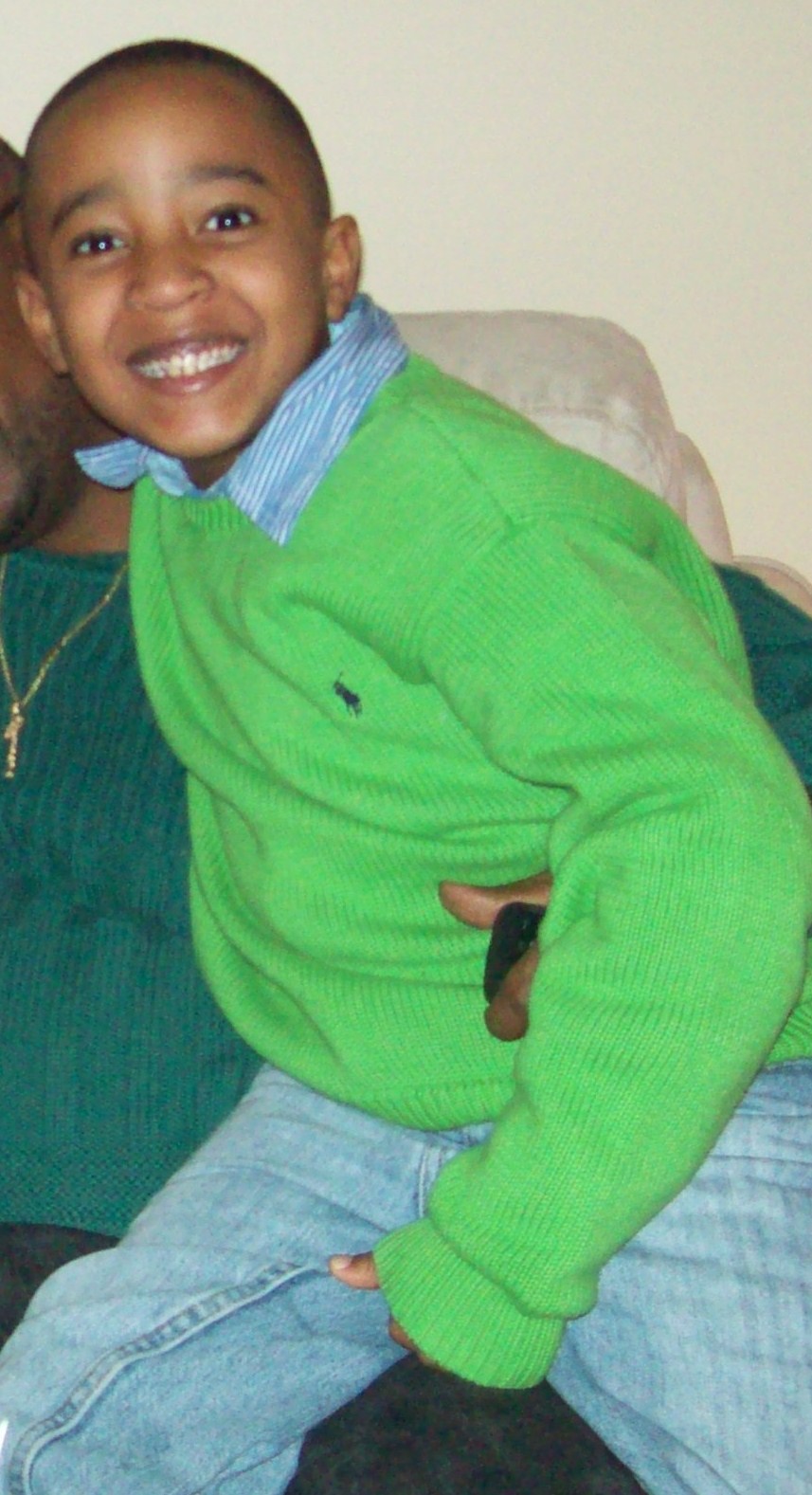
Joshua, 7 years old

I couldn’t hear what Joshua was trying to say. I saw little children picking the white baby doll over the black baby doll. I thought, “How could this happen? He has an Afrocentric mother, parents who love him and affirm his blackness. He’s around positive and progressive black people. He owns and reads books with black images. And he doesn’t watch that much TV. How could a baby like mine say he wanted to be white?” And I felt like a failure. I hadn’t instilled cultural pride into my child and now he was telling me so. After the nanosecond of these thoughts flooding my mind I thought to ask him WHY he wanted to be white. He reasoned: “All the white people wear nice clothes. The black children on TV don’t have food and clothes and hell is dark. I want us to be white.”

With his one hour of television a week, which included pleas to help poor children in Africa, casino billboards with fancy dressed white people, and lessons on salvation, Joshua had ascertained that all things white must be good and all things black must be bad, and he didn’t want any of us to have any part of anything bad. And though what he was saying revealed a bad situation, I was relieved. At 6, my son was a critical thinker and he wanted what he perceived to be the best for him and his family. Now the task was to teach him about propaganda meant to entice and make him feel less than others.

I thought I would deluge him with the history of black oppression at the hands of whites, saturate my home with more Afrocentric images, become involved in former activities where he would see me dressed in formal clothes and be around those I knew who flaunted their money and status. But as a strong black woman in recovery who is healing from racial and social pride, I knew these were bad ideas. They would perpetuate in Joshua what I was trying to get rid of in me. So I did what I should have done in the first place: pray.

In the middle of the night, Proverbs 6:25 came to my mind and I knew God was giving me the answer to help my son and others who may be competitive to the point of being covetous. “Lust not after her beauty in thine heart; neither let her take thee with her eyelids.” This ‘her’ was the ‘strange woman’ in verse 24 and though the strange woman here is interpreted whore, the Hebrew word also means “foreign; someone not like you.” And the word lust is the same Hebrew word for covet. Joshua loves the Bible and constantly looks for applications in his life. I knew we needed to revisit The 10 Commandments, specifically “Thou shalt not covet” because God was saying at the root of Joshua’s identity crisis was an issue with covetousness. Joshua was coveting his neighbor’s skin color and possessions, and I was convinced that Joshua would get this. He did.

On his own, Joshua said, “I’m telling God, ‘I know you gave me this skin color, but I don’t want it. I want white skin.” Then he looked embarrassed and curious, like he had just been scolded and knew what the consequences would be if he didn’t stop coveting. Joshua learned the lesson immediately and there has been no more talk about wanting to be white. This lesson, along with teaching that God created ‘all nations of men,’ has helped Joshua understand that his being black was no accident but an intentional incident, and because of that he has no reason to covet. Joshua is my hero because he took the word of God and immediately applied it to his life. Also, Joshua now is quite proud to be black, constantly expressing awe and joy when discovering blacks’ accomplishments. I’m just working on his ability to love all the nations of people God has created and not seek to return hate for hate. As we reflect on the state of black people during this Black History Month, I think Joshua’s lessons are good for us all.

Copyright 2010 by Rhonda J. Smith
We Shall Overcome Revisited

It was February 1978 and I was watching newsreels of the Civil Rights Movement in my primary school. At 9, my heart was saddened seeing thunderous water hose and hate-filled blows given to blacks relentless in their fight for freedom. The repeated images moved my heart from sad to mad that one group of people devalued another so much that they sought to keep them down by beating them down. And then I got angry because I was tired of singing “We Shall Overcome.” I remember thinking, “But they didn’t overcome. That song didn’t work. Can we sing a new song? One that works?”

Even though these thoughts flowed freely in my mind, I didn’t know how to verbalize them, at least not in a respectful way to Mrs. Clark, my pretty black teacher who carved confidence in us; to Mrs. Kraus, my Jewish music teacher who cultivated cultural sensitivity in us; or Mr. Mack, my white principal who was kind to all us kids in a non-patronizing way. So at 9, I had my own protest by refusing to sing “We Shall Overcome” another time. Not when Mrs. Kraus prompted us to join in with the armed-clutch crowd rocking back and forth on the newsreel, not in church after the pastor asked us to have a silent moment, and not during any other program looking back on the Civil Right Movement. That is not until last night during a live performance of jazz bassist Christian McBride’s The Movement Revisited: A Jazz Opus in Detroit.

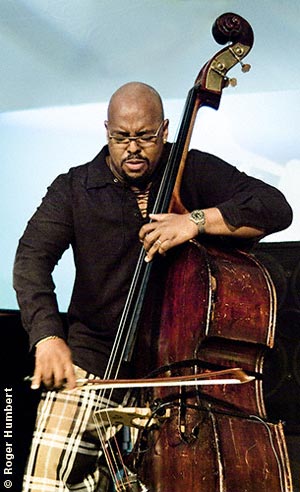
Christian McBride


A lover of jazz and gospel music, McBride masterfully blended two of my favorite genres with a jazz orchestra and a church choir and infused the music with narrations of speeches to commemorate the lives of civil rights icons Martin Luther King, Jr., Malcolm X, Rosa Parks and Muhammad Ali. To add to that, one of my sheroes, Sonia Sanchez, read the part of Rosa Parks. I feasted on great words and music that reverberated my being. The Second Ebenezer Majestic Voices opened by singing “This May Be My Last Time” as jazz rifts infiltrated the vocal proclamation. Second, an 18-year-old high school student eloquently read Dr. King’s opening address to the 1964 Berlin Jazz Festival:

“Jazz speaks for life. Much of the power of our Freedom Movement in the United States has come from this music. It has strengthened us with its sweet rhythms when courage began to fail. It has calmed us with its rich harmonies when spirits were down.”

When I heard King’s statement about jazz and considered how it and some gospel songs make me feel like I can move mountains, I knew why the freedom fighters kept singing “We Shall Overcome.” This was a song of faith, declaring that even if they didn’t see come to pass what they were fighting for, they would continue to fight so that following generations could be free to be who God created them to be. So, third, when the Detroit church choir sang an upbeat “We Shall Overcome” with the jazz infusion, I proudly sang along knowing the power of the song and how it in fact had worked.

I had a glorious night, and was glad Christian McBride and the Detroit International Jazz Festival had brought this opus to Detroit. I’ve always liked McBride, but now he is one of my heroes for using the amazing gift of musical composition that God has given him to inspire us all to continue to fight for human rights.

Copyright 2010 by Rhonda J. Smith

James Baldwin's Courage

Writer James Baldwin

I once wrote a research paper off the top of my head. You might think this story’s tragic end is that I got an F. Actually I earned an A and was chosen to read my paper to the entire class as a model for what the professor was looking for. I had a bibliography of books that I had read and a PBS video that I repeatedly watched over the years. These supported my biography of the life and writings of American author James Baldwin (1924-1987), a man who lived deep in my soul. He historically has been my favorite writer.

Some of you may be squinting right now, wondering what my attraction to an ex-boy preacher and openly gay man could be. And others of you more familiar with his life and mine may even wonder how I, a trustworthy woman, could revere a man who had a hard time being reliable. But beyond his sins and greater than his literary symphonies were lessons I have learned that some of his quotations helped to spur:

• “You didn’t tell me, I told you” (PBS’ American Masters)—speaking about his open homosexuality.

Be honest about who you are and don’t let people discover things about you then throw them in your face. Then and only then can people decide how to deal with you, and you can get help for those areas of struggle (2 Corinthians 8:21; James 5:16).

• “(P)eople who cannot suffer, can never grow up, can never discover who they are” (The Fire Next Time)—referring to how blacks’ enduring suffering has made them better as a people.

If your acceptance of Jesus Christ as Savior and Lord is real, you will suffer because of your belief, making you stronger and proving that you are in the faith (Matthew 5:10-12; 2 Timothy 2:3-12; 2 Corinthians 13:5).

• “There was absolutely no way not to be black without ceasing to exist. But it frequently seemed that there was no way to be black, either, without ceasing to exist” (Every Good-Bye Ain’t Gone).

As a black American, you are often in a Catch-22 situation. If you ignore the racial part of you (by not talking about race and altering Negroid features because you hate them), you essentially kill who God created you to be. On the other hand, if you fully embrace the racial aspect of who you are, frequently examining and talking about race and honoring your Negroid features, you become something other than black—TOO BLACK, or simply ignored; you, too, cease to exist.

As a Christian, you may consider yourself in a Catch-22 if you are a people pleaser. If you deny your faith, say to appease others, you cease to exist (or never existed) as a Christian (Jesus will deny you—Matthew 10:33). But on the other hand, when you speak loud about your faith in Jesus Christ, others deny you; you may cease to exist to your “friends” and “family.” Either way, people pleaser or not, you cease to exist when you seek to serve Christ (Matthew 5:10-12).

Writer/activist James Baldwin spoke loud about who he was and what he believed. People knew what they were getting when they met him. Do people know who they are receiving when they meet you? Do you speak loud about being a Christian and your belief that Jesus Christ is God? If not, I encourage you to get to talking and being the righteous seed you claim to be.

Copyright 2010 by Rhonda J. Smith

Fight to the Death

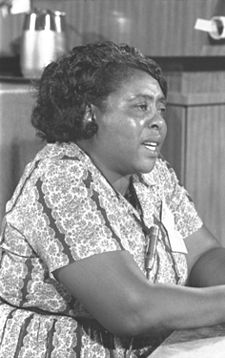
Civil Rights Activist Fannie Lou Hamer

In one of my undergraduate black studies courses, my end of the year project was a presentation on someone in black history. I chose sharecropper and civil rights activist Fannie Lou Hamer. I liked her grit and grassroots efforts to bring equality to her state of Mississippi and the country. When the Student Nonviolent Coordinating Committee (SNCC) came to Mississippi to tell black folks they had a constitutional right to vote, Hamer was one of the first to go to the courthouse to register. She was beaten, jailed, and continually threatened but none of those evils stopped her. She was fearless as a SNCC field secretary and traveled the United States telling black folks that poll taxes and tests to vote were illegal, and she registered them to vote.

In 1964, as a founder of the Mississippi Freedom Democratic Party (MFDP), she stepped on the broader national scene when she challenged the seating of the Mississippi delegation—all white—at the Democratic National Convention. Her speech that had the oft quoted phrase “sick and tired of being sick and tired” helped to grant others MFDP delegates the right to speak and special seating. This mother and activist also worked with other groups to improve the lives of the oppressed. Hamer often sang Christian hymns in the midst of her work, seemingly connecting her physical battle with a war in the spiritual realm. In 1993, this freedom fighter was posthumously inducted into the National Women’s Hall of Fame.

I related to Hamer. And even though I hadn’t seen the newsreel of her speech, my teacher said that my role play voice sounded just like Hamer. In my early 20s, I had had my share of discrimination. From being under the watchful eye of retail workers to professors discounting my classroom contributions to potential employers assuming my experience had only been granted because of a quota system, I knew the sting of racism. And though my sting was real, nothing compared to what Hamer and thousands of other blacks felt during the height of the Civil Rights Movement. That’s why I could only play the part of a Fannie Lou Hamer. She fought for her rights because “The only thing they could do to me was to kill me, and it seemed like they’d been trying to do that a little bit at a time ever since I could remember,” she said. Not being under the overt daily threat of death, the least I can do is to vigorously fight for justice in the sphere that the Lord has given to me. I challenge us all not to be comfortable in our Christianity, but to stand in the face of adversity and to speak out against those who seek to silence our voices. Fight for your freedom, whether racial or religious. This is what we are called to and must do to honor the memory of folks like Hamer and to give honor to our Lord and Savior Jesus Christ.

Copyright 2010 by Rhonda J. Smith

Sources: ibiblio, National Women’s Hall of Fame and Wikipedia

The Ones I Wanted to Write About

I wanted to write about the bishop who became the first in her denomination and the writer who is an Old Testament scholar and the one who started a black community in her denomination, but I couldn’t. I couldn’t because the honor would seem like acceptance of twisted ideas. I couldn’t accept the supporting of heretical texts to “prove” scripture or the normalcy of homosexuality because of her lesbian friendship or the dabbling in a spiritual séance. To write about these Christian women would be to affirm their notions, to say the way they purport Christianity is ok. And that I cannot do.

But I will write about the journalist who spoke out against lynching and the grassroots woman who founded a democratic party and others, who, as far as I know, didn’t dilute Christianity for personal comforts. And I don’t mind writing about the likes of James Baldwin and Angela Davis because their being Christian is not the basis for lauding their righteous ideas. When you say who you are I respect that and expect your work to reflect that. These are the people I can write about and that I will do.

The realization of not being able to write about those I admire in many ways took me aback. I tried to figure out how I could incorporate disclaimers but the disclaimers would either outweigh or effectively cancel the celebration. Has something like this ever happened to you? Have you ever had to cease supporting someone you once supported because you realized that your beliefs were in conflict? I would love to hear about it. And I pray God’s power and protection for those who have given up support in order to honor Jesus Christ and His Kingdom.

Copyright 2010 by Rhonda J. Smith