Cut the Locks

In 1992, I made the huge step to wear my hair in its God-given state. For years I had said I would lock my hair when I turned 60. I chose 60 because I figured I would be established in my career and would have great influence with those around me so no one would have the power to force me to change my hair. Well, I didn’t wait until 60. In 1992, I decided no more relaxers for me and cut my straightened hair until my natural coils formed a nicely cropped fade. It was cool, but I longed for the locks I saw the confident women in my African dance class and a black women’s academic conference at MIT wear. The way they moved and expressed ideas had to have something to do with the hair, I reasoned. It was as if the assurance of their bodies and minds had positioned itself on the top of their heads, and I wanted that type of assurance.

In May 1994, I got my hair twisted to begin the process of dreadlocks and my confidence followed, not confidence accepting the hair that God gave me, but confidence in my locks being “the best” or “the neatest I’ve ever seen,” as people constantly told me. I would smile and give a proper thank you, but inside I would be gloating, talking to myself, saying, “I know. I hear that all the time” or “My hair is beautiful, isn’t it?” To my knowledge, no one knew this ugliness was in my heart. No one even suspected it was there, except for God, of course. And in July 2001, He told me I had to cut away the ugliness, symbolized by cutting off my locks.

My initial objection to His request made me realize how deep my ugliness ran and let me know that I had to be obedient. “No, I’m going to be on HGTV so I can’t cut my hair,” I said aloud, and I heard the vanity of wanting to have fabulous hair when featured on my favorite network at that time. In an instant moment of spiritual sanity, I got the scissors, went to the mirror and cut my locks along with a stream of tears. My momentary sadness had turned to joy, knowing that I was pleasing God and on my way to healing from hair pride. I knew my journey was about complete when I felt led to lock my hair again in 2003, after two years of obedience to no professional haircuts. Since I was four, there was never a time when I didn’t have regular salon appointments. In those two years I learned that the salon contributed to my hair pride, and I needed to get healthy in heart before allowing a professional to style my hair. There’s so much more to this hair journey. Even now the story is still being written. I’m finished for now but still would love to hear your stories.

Copyright 2009 by Rhonda J. Smith
Hair Pride

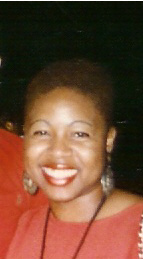
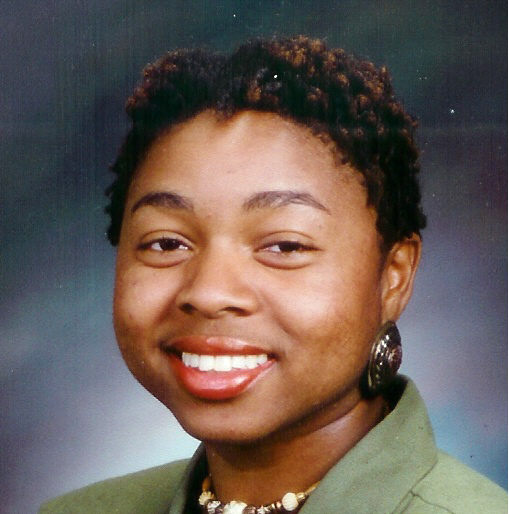
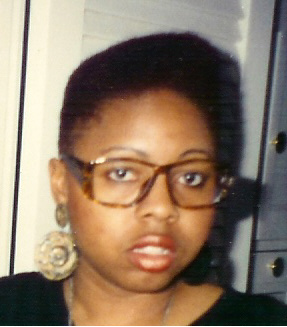
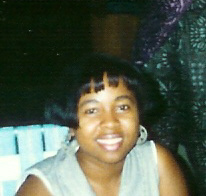
My hair once looked like these:

Cropped with china bangs

Cropped with china bangs

Faded with auburn color

Faded with auburn color


Baby dreads with color on tips

Baby dreads with color on tips


And these:
Faded Hair Gumby-style

Faded Hair Gumby-style


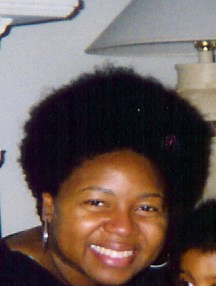
The Afro

The Afro


When I got grown, I was happy to wear my hair the way I wanted to, and took it to the hilt. When I was a child, I vowed that I would wear my hair the way I wanted to as soon as I could. This heart decision happened at four, when I was standing in my hall mirror watching my natural hair dry; my hairdresser wasn’t available that week so my hair was being done at home. “Oooo, ma, can’t I keep it,” I said as I admired my impending Afro, but my mama declared “Un, un. We gonna press that nappy” head. And press we did. Every two weeks where I also got two ponytails and a bang. Once, when I was five, I convinced my hairdresser to style me three ponytails instead of my regular two and a bang. My mother wasn’t having it. Two ponytails and a bang was how she could manage my hair in between two week appointments so when she arrived to pick me up she had Mrs. Barrow restyle my hair, after putting me in my place for deciding what I would do with my hair, and I wasn’t paying for it, and I was the child and the nerve I had…..

So from a young age I have wanted to wear my hair the way I wanted to wear my hair, and natural was at the top of the list. The pressing comb traumatized me, and I have always thought there was nothing wrong with kinky hair, even when my 5th grade boy nemesis said my hair was hard, and in 7th grade my arch girl rival (who I thought was my friend, BTW) compared her long flowing hair to my cropped mushroom by asking “How long is your hair?” as she stretched a few locks of mine while tousling hers. These incidents set the foundation for me eventually having pride in my hair. I was determined to do what I wanted to do and never let a mama, a Ronald or a Lauren make me feel bad for how I decided to wear my hair. I, like many of us women with hair woes, obsessed over my look, would pout when I didn’t like it and would try a new look just to stand out from my last style and among other women. God challenged me about this hair pride when I began wearing my hair locked 17 years ago. I’ll tell you about that the next time. In the meantime, does my story sound familiar? What are your hair war stories? I invite you to comment and look forward to the dialogue.

Copyright 2009 by Rhonda J. Smith
Remember the Dead

He had the most perfect smile and a huge heart, big enough for the burdens and joys of addictions and teaching; naggings and yelps for help; counseling and cooking; providing and protecting; and just showing pure love. That was Curtis Anderson Sr. That was my dad.

As I remember my dad on this Memorial Day, I am reminded of the great love Jesus had for us and still has for us. He died for our sins. We must remember that. He rose again for our life. We must remember that. And to not shame His cross, we must remember all the old that has died in our lives that we might not reclaim the past again. Philippians 3:13 says, “Brothers, I do not consider myself yet to have taken hold of it. But one thing I do: Forgetting what is behind and straining toward what is ahead.” So we shouldn’t dwell on the past, but we must forget the past in the sense of not caring for it anymore. “Therefore, if anyone is in Christ, he is a new creation; the old has gone, the new has come!” (2 Corinthians 5:17). Even as you remember the past so you won’t reclaim it, let the dead in your life remain dead. The love of Jesus can give you the power and strength to keep looking forward even as you remember.

Copyright 2009 by Rhonda J. Smith
Carrier of Life

Last week author Marilynn Griffith visited my blog and talked about motherhood pride. If we’ve ever had those moments when we thought our children were simply stellar, there may have been a time when you couldn’t always say that or there may come a time when you simply breakdown because it seems all your efforts are futile. Marilynn reminded us that even when you train your child “right,” you may be in for a few surprises from them. I wrote the following poem this week for my church’s women’s month to help us remember our God-given role as mothers. The night’s focus was “I Am a Mother,” and as mothers we should always keep in mind what Marilynn said: “(Children) are a gift from God given for your care (and feeding!) until God releases them into their destiny, which is the same as ours–to change the world for Christ.”
Carrier of Life
Copyright 2009 by Rhonda J. Smith

Family Pride

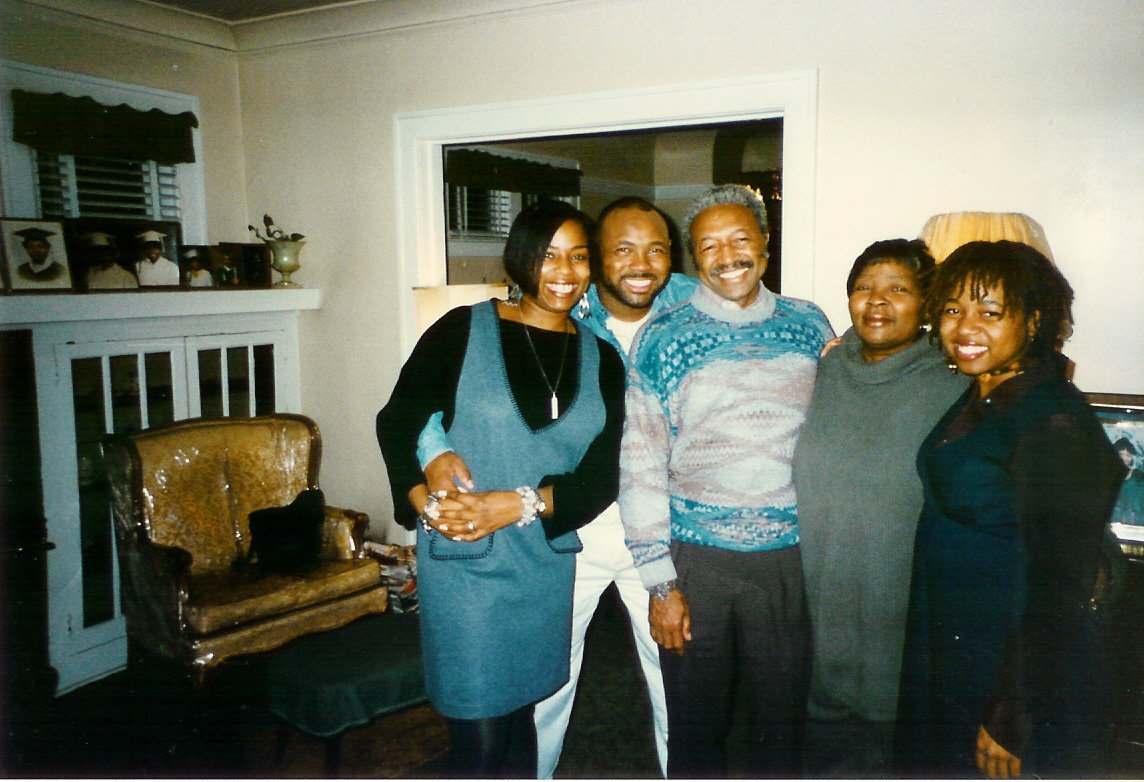
My birth family circa the early '90s: (from left) my sister, Sharon; brother, Curtis Jr.; father, Curtis Sr.; mother, Santranella; and me

My birth family circa the early '90s: (from left) my sister, Sharon; brother, Curtis Jr.; father, Curtis Sr.; mother, Santranella; and me

When I was growing up in the 70s the kids on my block called my family The Brady Bunch because of the harmony in my home. Then in the 80s they called us the Cosbys (or Huxtables) because I came from a home with two college-educated parents who had professional jobs. And like all families, we had certain ways we did things and with those certain things came certain expectations for us and others: Every summer we took a family trip—“Hasn’t every family been somewhere together?”; We insisted that people eat every time that came to our home—“Why didn’t they offer us something to eat the whole time we were at their home?”; “We don’t handle things like that in our family”—“Why did they say that? Their family is tacky!” I can’t even recall the countless times that my mother was proud of the excellence displayed that she placed in us, her children. Whenever she witnessed or heard about one of our successful presentations, she would celebrate us like any proud parent would, but then she would go a little further and say something like, “I know you mine, but you were the best.”

My family dynamics and the words from my mother gave me great pride in my family. I became haughty—if only in my heart and most times that’s where it was—when a grown woman didn’t know how she should dress or what she should say and when she should say it, things that I learned in my family. She would rarely know how I despised her and exalted myself. These thoughts often remained with me (except when disgust would creep onto my face but would never show the depth of what I was feeling). To my mother’s credit, she also taught us to help others who may not have learned what she and my dad taught us. So I would help these unwitting souls, but for me, the pride message was stronger and went deeper. I really didn’t want to be bothered with no trifling women who didn’t know how to act. I wasn’t their mother and didn’t have time to teach them.

As I have grown in Christ, I have put away this strong black woman attitude and have taken on the Christian mantle of the strong understanding of the flaws of the weak (Romans 15:1). The Kingdom of God mindset is for us to remember that none of us was created equal, we are all members of one body that function differently, and we need each another (1 Corinthians 12). Even those outside of the Kingdom were created in God’s image and should be treated with the love and respect given to the almighty creator, Jesus Christ himself. Yes, pride can make you idolize your family, but being renewed by God’s word truly can help you to be a new person (2 Corinthians 3:18). I am changed so I know that God’s word has transforming power.
Copyright 2009 by Rhonda J. Smith