
Wisdom of Forgiveness Beyond the Grave

What Do You Think? Wednesday
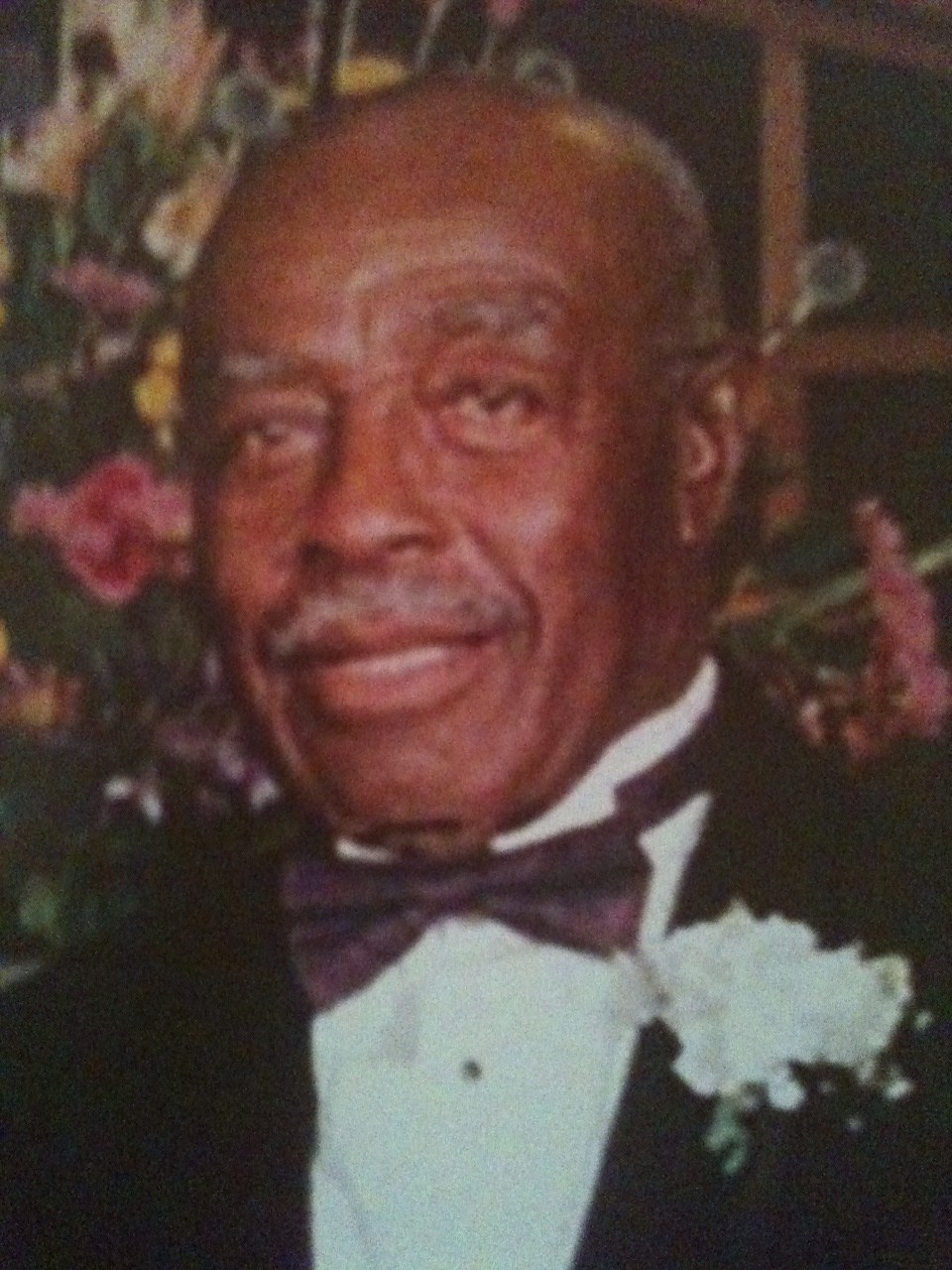
Yesterday my family buried a prince of a man: Daniel Thomas, my grandfather who lived more than nine decades and had the wisdom to prove it. With his wit and few cents, he snagged and married my grandma, moved from LA (as he liked to call lower Alabama) to Michigan, made a living as a truck driver, sent two kids to school, and pulled enough resources to help dozens of others. He knew no no’s, gathered a bunch of yeses from well placed questions, other observations and a dazzling smile. He knew how to ingratiate himself to people and never let illiteracy or Jim Crow laws and attitudes stop him.

He knew what to do.
He knew what to say.
He knew how to get over.
He knew the power of grace.

But love your enemies, and do good, and lend, expecting nothing in return, and your reward will be great, and you will be sons of the Most High, for he is kind to the ungrateful and the evil.—Luke 6:35.

He loved those who despised his skin color and the fact that he couldn’t read; he spent time and money to make so many comfortable and only expected that we would do for others, too. He was favored of God and man, for certain the son of the Most High, who is kind to ALL, even the ungrateful and evil ones. And if to the ungrateful and evil ones, even to our loved ones who don’t express to us love.

Granddad’s spirit still hangs over my cloud of unforgiveness toward those I expected to express their concern for me during my family’s bereavement. That spirit wants to clear the dark cloud that wants to rain revenge, to tell them “Forget you,” and never show an act of kindness again.

“… [D]o good, and lend, expecting nothing in return. . .”

This I must learn.
This I must do.
This is how to get over.
This displays the power of grace, a great testimony for a strong black woman in recovery.

How have you struggled with displaying grace to those who have wronged you? What lessons have you learned in the process?

Copyright 2011 by Rhonda J. Smith

Pass Your Test

I’m a word girl; you know that by now. Don’t ask me about scientific processes, dates from significant historical periods or how to figure out a geometric problem. I would look straight dumb in most of these instances. So you know I was elated when I went to college and had to take only a few science and history courses and no math whatsoever. I was okay with not passing a few tests and overjoyed not to take one math test, but as you know hard tests transcend the walls of academia. We face them every day, can’t escape them if we tried, and we decide based on our preparation if we will pass these tests.

I had one last night. Flynn and I had dinner with a young married couple we mentor. They were talking about an unexpected car expense they had from their car just dying on them in route somewhere. We encouraged them to be thankful that they had the money for repairs and to remember “that life sometimes throws you curve balls,” tests that you don’t want and don’t expect. On our way home we got a curve ball: ironically our car died on us in the left lane of the expressway in the middle of a snowstorm. With the words to our young couple fresh on our minds, we had to decide what the answers to our test would be.

Brethren, if a man be overtaken in a fault, ye which are spiritual, restore such a one in the spirit of meekness; considering thyself, lest thou also be tempted” (Galatians 6:1).

With this verse ever present as we mentor young couples and our scriptural arsenal we decided to believe that our God would supply all our need according to his riches in glory by Christ Jesus (Philippians 4:19). Though we didn’t understand why the car broke and the fees came when the income is low, we understood that we couldn’t by worrying add a single hour to our lives (Matthew 6:27). We chose to accept that God, who cloths the non-employed grasses with lilies and feeds the jobless birds, would take care of us who do work and are more valuable to God than these (Matthew 6:25-32).

Yes, I’m a word girl, but these glorious words sometimes sting like a fast curve ball pitched by the opposing team. They are like the phrasing of trick questions on dreaded tests that you have studied for but had no idea would show up like these. These words sometimes seem too hard to learn. But I like words and praise God for the ones with promises. They are so much easier to remember and eat even with their sting.

What tests have you had lately? How well have you done with them?

Copyright 2011 by Rhonda J. Smith

Evil Men and Seducers

A few months ago I drew toward the screen slowly, glued to the tweet that revealed all the heat Bishop Eddie Long was taking: Accused, four times, of taking the innocence from young men and posturing like his interactions were daddy’s privileges. Still, we don’t know if it’s all true, who lied and what prices will be paid to settle the dust of it all. Though he recently agreed to mediation instead of a trial, the dust won’t really settle. It will cover and cling to a church and its leader’s reputation like relics in the attic, kept around for nostalgia’s sake, a way to remember the good that used to be. As the process continues to find who is at fault and perhaps get to the truth, I’m reminded of this:

But evil men and seducers shall wax worse and worse, deceiving, and being deceived.—2 Timothy 3:13

This verse is the story of our day. Headlines blaze with the latest charlatan coming and carrying folks away with enticing words and various schemes. Some say this may be Long. I say whether Long is a charlatan or not, we must learn from this verse because we are all vulnerable to being deceived.

Evil men are those who are ethically bad, wicked people. Though they could be people in the church, they are probably those outside the church. I say this because the next phrase in the verse is seducers, written to be distinct from evil men. It means deceivers/imposters. These people are concealed evil men, wolves in sheep’s clothing. Their mission is to act like they are Christians so they can be deceiving, which means leading away from truth; leading into error. Imposters have to be among believers so they can blend in. They are our teachers, worship leaders, ushers and, of course, our preachers. They come with agendas, intending to do wrong from the very start. These fake Christians work to lead people away from the truth of God’s word, supplanting and twisting it to suit their desires. And I believe they do so easily because, as the verse tells us, these seducers, too, have been deceived. They have been led away from truth and into error so when they are leading others, what they have are lies to give and with these lies they will lead others to do wrong. Paul, the author of 2 Timothy, is telling us that there will be an increase in the amount of evil people outside and inside the church. Both these groups have nefarious intentions, causing great harm to the world and the church. Without claiming to have the Spirit of God, the wicked outside the church may be easier to spot. The tricksters are the ones we really have to watch out for.

What has been your experience with evil men and seducers? Please comment on the blog site so we can get a lively discussion going.

Copyright 2011 by Rhonda J. Smith

False Reign-The 14th Day of Christmas

On the 14th day of Christmas my true love gave to me a picture of reigning reality (Ezekiel 21:27).

When we decide we know what to do when God hasn’t so much as given us a clue, we rule our lives but may soon be surprised that our reign was just an illusion. This I tried to convey, in more words or less, to a young woman whose husband wants more children and she is so good and godly with them but wants to remain on birth control so she can fulfill her dreams. And this illusionary reign was the same message to another too fearful to open test results that may determine her employment future. No pills can stop God’s planned pregnancy nor can unopened test scores change the results. I told them this easily from the soundtrack of my life: Let God reign supreme. That way you’ll get everything you need and then some (John 15:1-17). This is a hard lesson for us with all our rights; we forget that God has the right to reign, including our lives.

Looking to the second coming of Jesus Christ, God the Father says He will displace the false messiah and no one else will rule until “He comes whose right it is, and I will give it to Him” (Ezekiel 21:27).

This prophecy speaks to the end time but helps us understand that Jesus has the right to rule the earth and, as our Lord, then most definitely, our lives. Keeping in the forefront of my mind Jesus’ right to rule my life, I have had to let go of my illusionary reigns, like my drive to succeed on my terms. Though scary at times, my life is always so much better when I stop trying to be someone I could never be, take the backseat and let Jesus drive my life.

Copyright 2010 by Rhonda J. Smith

The Underdog Rises-The 27th Day of Christmas

On the 27th day of Christmas my true love gave to me a Savior from the tribe of Judah (1 Chronicles 4:1).

We like cheering for the underdog, but none of us wants to be the underdog. I know I don’t, and when I find myself in that position my mind goes to Mark 9:35 that says, “the first shall be last and the last shall be first.” Jesus said this to his disciples who were debating about who was the best among them. He gave them this lesson in humility, and they didn’t get it, and neither did Leah, Jacob’s first wife who he treated as the last.

I have always felt sorry for Leah. Many of us know her story. Her father tricked Jacob into marrying her instead of her beautiful younger sister, Rachel, who Jacob wanted to marry. She wasn’t very attractive; her husband didn’t want her and nothing she did made him want her; and she spent the first seven years of marriage watching her husband work so he could marry her sister. She definitely was the underdog and knew it (though I wonder how complicit she was in the trickery and may have contributed to her being undesired. I don’t know, but that’s beside the point right now.).

The only time Leah was on top was when she got pregnant and gave birth to sons, something every man wanted to carry on the family legacy. After she had Judah, her fourth son, “[t]hen she stopped bearing” (Genesis 29:35). And then she took matters into her own hands. After seeing Rachel’s maid giving birth on behalf of her barren sister, Leah, too, gave her maid to Jacob so she could try to have more sons. Leah was dissatisfied with Judah being her last, thinking he represented the end of her being able to conceive. What Leah didn’t know was that Judah may have been last at that moment, but he was destined to be first:

“The sons of Judah were Perez, Hezron, Carmi, Hur and Shobal.”—1 Chronicles 4:1.

This is the beginning of the genealogies of the Twelve Tribes of Israel. Even though Judah was the last son when Leah took matters into her own hands, he has the first genealogical listing, representing his prominence, but chiefly representing the preeminence of Jesus Christ, “the lion from the tribe of Judah.” While Leah jockeyed to be first, she had no idea that the Savior of the world would come through her womb, the first and the last, all we ever need, whether we’re the underdog or the top dog. When we get to the point where we stop conceiving, let us not take matters into our own hands trying to conceive a plan, project or even a baby that may be out of God’s order. Our last conception may very well be our best and the one God will have rise to the top.

Copyright 2010 by Rhonda J. Smith